In the first two posts in this series, we looked at the tragic story of Aileen Wuornos. The media’s portrayal of her was a double-edged sword, both sensationalizing her crimes and providing a platform for her voice. This blog post will explore the media’s portrayal of Wuornos, examining the sensationalization of her crimes, the bias in reporting, and the impact on public perception.
Sensationalization of Her Crimes
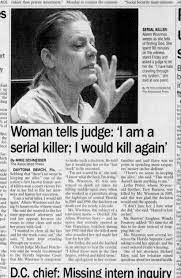
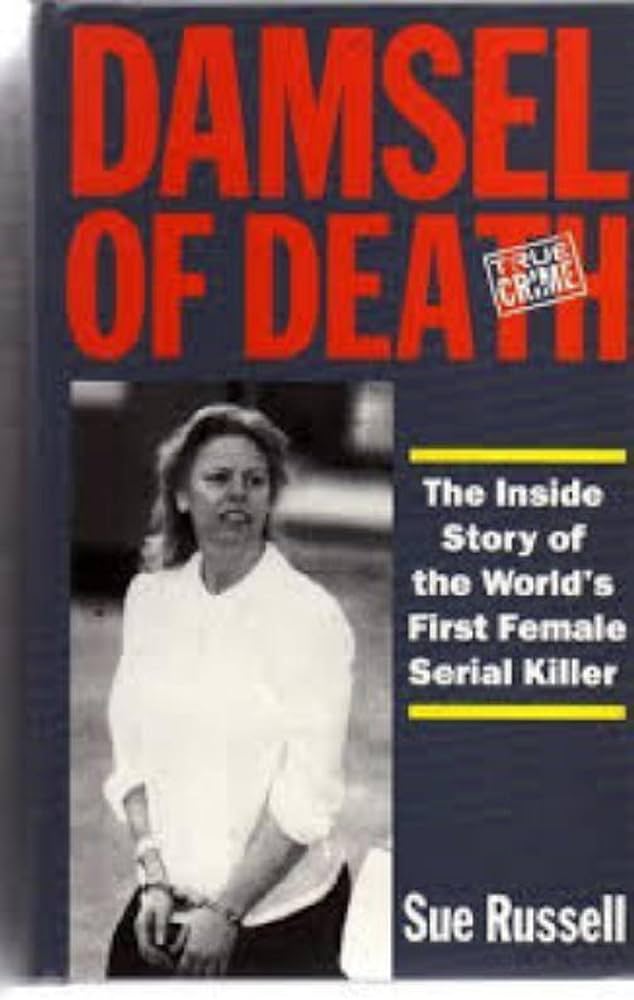
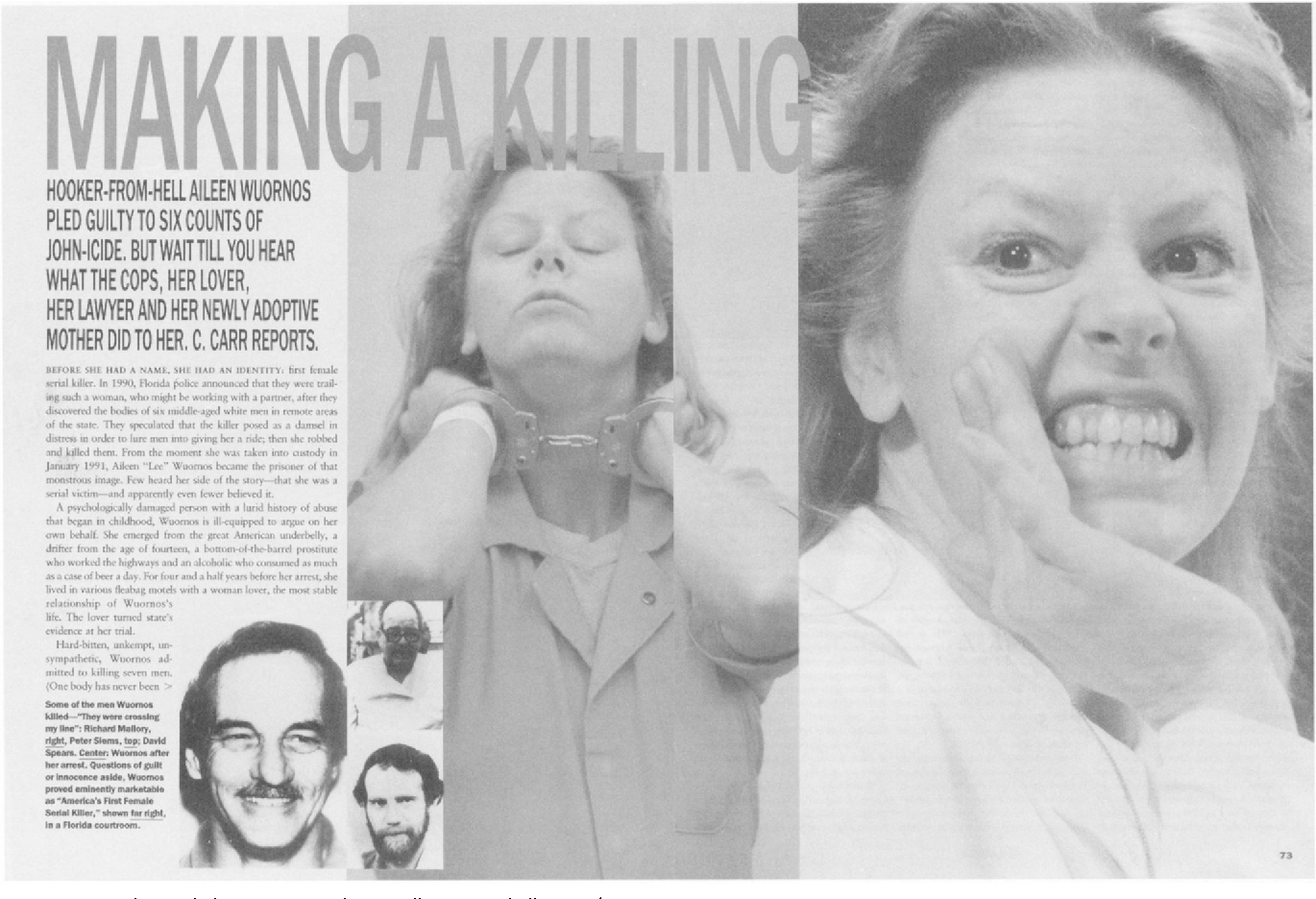
The media seized upon the sensational aspects of Wuornos’ case, dubbing her the “Damsel of Death” and the “Monster of Florida.” Headlines screamed about her “chilling modus operandi” and painted her as a “man-hating murderer.” This sensationalized reporting focused on the brutality of her crimes and her troubled past, often neglecting the complexities of her mental health and the potential mitigating factors in her case. For example, a 1992 article in the Orlando Sentinel described her as a “cold-blooded killer who preyed on innocent men” and a 1993 article in the New York Times as a “monster who deserved to die.”
The language used in these headlines and descriptions was often dehumanizing and inflammatory. Wuornos was frequently referred to as a “monster,” a “beast,” and a “predator.” These words served to strip her of her humanity and portray her as a purely evil figure. The media also frequently used graphic language to describe her crimes, focusing on the details of the murders and the suffering of the victims. This type of reporting served to titillate and shock the public, rather than inform them about the complexities of the case.
Impact on Public Perception
The media’s relentless focus on the sensational aspects of Wuornos’ case undoubtedly shaped public perception, portraying her as a monstrous and irredeemable figure. The image of a female serial killer was a rarity at the time, and the media’s portrayal of Wuornos as a deviant and dangerous woman likely reinforced societal fears and prejudices. A 2003 study by the University of Florida found that people who had been exposed to media coverage of Wuornos’ case were more likely to believe that she was a “monster” and that she deserved to be executed. The study, which surveyed over 500 people, found that those who had read or watched news reports about Wuornos were more likely to hold negative views of her than those who had not been exposed to media coverage.
However, as Wuornos’ story unfolded, there were shifts in the media’s portrayal. Initially, some reports focused on her claims of self-defense, portraying her as a victim of male violence who had taken drastic measures to protect herself. This narrative resonated with some who saw her as a symbol of female empowerment and resistance against patriarchal oppression. For example, a 1992 article in the New York Times described her as a “woman who had been pushed to the brink by a lifetime of abuse” and a 1993 article in the Los Angeles Times as a “hero who had taken a stand against her abusers.”
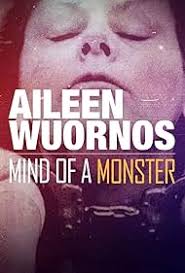
As Wuornos’ relationship with Tyria Moore deteriorated and her confessions became more inconsistent, the media’s focus shifted towards her as a cold-blooded killer motivated by greed and a desire to eliminate witnesses. This shift in perception was fueled by Wuornos’ own contradictory statements and the lack of corroborating evidence to support her self-defense claims. For example, a 1993 article in the Orlando Sentinel described her as a “liar who had made up the self-defense story to avoid the death penalty” and a 1994 article in the New York Times as a “monster who had no remorse for her victims.”
Omission of Mental State
One of the most glaring flaws in the media’s portrayal of Wuornos was the frequent omission of her mental state. News coverage of her trial often focused on her criminal acts and her perceived lack of remorse, neglecting to discuss her diagnosed mental health disorders and the potential impact they had on her behavior. This omission perpetuated the image of Wuornos as a rational actor who had made a conscious choice to commit murder, rather than a deeply troubled individual struggling with severe mental illness. For example, a 1993 article in the Orlando Sentinel described her as a “cold-blooded killer who showed no emotion during her trial” and a 1994 article in the New York Times as a “monster who was beyond redemption.”
Conclusion
The media’s portrayal of Aileen Wuornos was a complex and often contradictory one. While the sensationalization of her crimes and the bias in reporting undoubtedly shaped public perception, her notoriety also provided her with a platform to share her story and her perspective on the world. Her legacy continues to spark debate about the nature of evil, the possibility of redemption, and the role of the media in shaping our understanding of crime and punishment.
It is important to remember that Wuornos was a real person with a complex and troubled life. The media’s portrayal of her often failed to capture the full complexity of her story. By focusing on the sensational aspects of her case and neglecting to discuss her mental health issues and the potential mitigating factors in her case, the media contributed to her demonization and made it more difficult for her to receive a fair trial.
Wuornos’ story is a reminder of the importance of responsible journalism. The media has a responsibility to report on high-profile cases accurately and fairly. They should avoid sensationalizing crime and should be careful not to perpetuate stereotypes or biases. They should also be mindful of the potential impact of their reporting on public opinion and the criminal justice system.
Wuornos’ story is also a reminder of the importance of compassion and understanding. Even in the darkest of hearts, there is always the potential for light. By approaching her story with compassion and understanding, we can learn valuable lessons about the root causes of violence and the importance of addressing the needs of those who have been marginalized and traumatized by society.
Sources
- Biography.com has a really great article on Wuornos.
- This book, Dear Dawn, is a collection of Wuornos’s letters from prison to her childhood friend, Dawn Botkins. It is truly a special book, giving us a look inside her thoughts and her communications with one of the few people in life who truly cared about her.
- Monster is a book written by Wournos along with Christopher Berry-Dee. I’m not a fan of the title, as I truly believe she is more of a victim than a monster, but this is a great book with excellent insights and analysis.
As an Amazon Associate, I earn from qualifying purchases. I include the links to books that I have found interesting.
 The Crime Chronicles
Leave a comment