Introduction
The Burger Chef murders are one of the most notorious unsolved crimes in Indiana history. On the night of November 17, 1978, four young employees of a Burger Chef restaurant in Speedway, Indiana, were abducted and murdered. Their bodies were found two days later in a wooded area about 20 miles from the restaurant. The victims were 20-year-old Jayne Friedt, the assistant manager, and three teenagers: Mark Flemmonds, Ruth Shelton, and Daniel Davis. Two of them were shot, one was stabbed, and another was beaten to death. Nearly 45 years later, the case still remains unsolved, but the families cling to hope that they will one day find justice.
The Crime
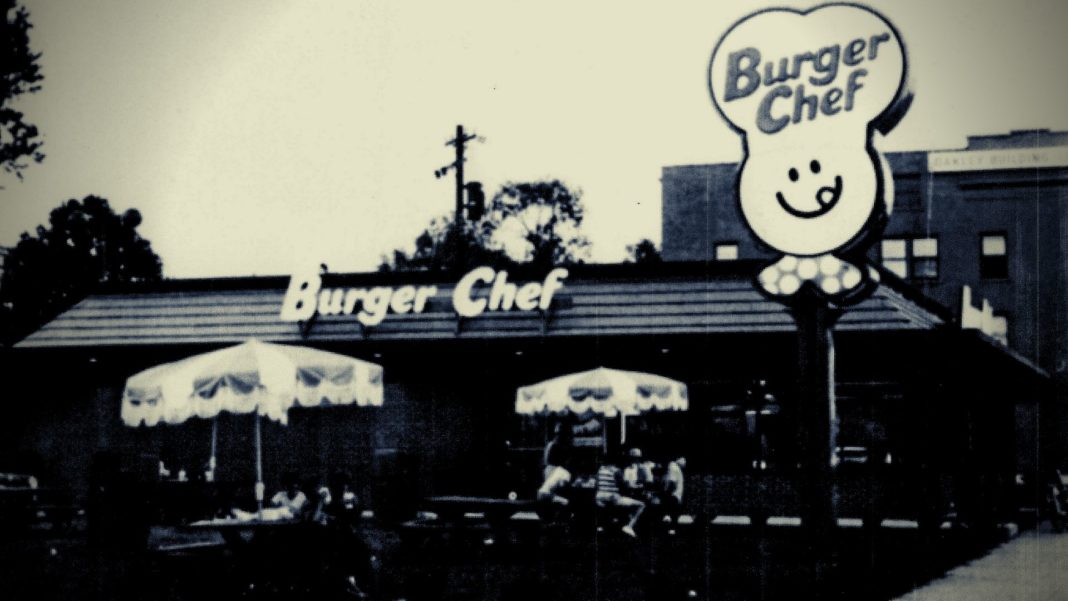
On the night of November 17, 1978, four young employees of a Burger Chef restaurant in Speedway, Indiana, were abducted and murdered. The victims were 20-year-old Jayne Friedt, the assistant manager, and three teenagers: Mark Flemmonds, Ruth Shelton, and Daniel Davis.
The four employees were working the late shift at the Burger Chef when they were kidnapped during an apparent robbery. A fellow employee who came by at midnight to visit the four noticed that the restaurant was empty, the safe was open, and the back door ajar.
Police found two empty currency bags and an empty roll of adhesive tape next to the open safe. There was no money in the register, and the purses and jackets of the missing women were left at the shop. There was no sign of a struggle inside the restaurant.
Two days later, their bodies were found in a wooded area about 20 miles from the restaurant. The bodies of 20-year-old Jayne Friedt, 16-year-olds Daniel Davis and Mark Flemmonds, and 18-year-old Ruth Ellen Shelton were found later in Johnson County.

Both Davis and Shelton had been shot numerous times with a .38 caliber firearm. Friedt had been stabbed twice in the chest. The handle of the knife had broken off and was missing; the blade was later recovered during an autopsy. Flemmonds was later determined to have been bludgeoned — possibly with a chain — and died from choking to death on his own blood. All four victims were still wearing their Burger Chef uniforms. Money and watches were found on the dead victims, implying that robbery might not have been the sole motive for the murders.
Suspects and Motives
Police launched a massive investigation and interviewed numerous witnesses and potential suspects. However, no one has ever been charged. The Indiana State Police continue to keep the case open, and have reportedly investigated the use of DNA-tracing techniques developed since the initial investigations.
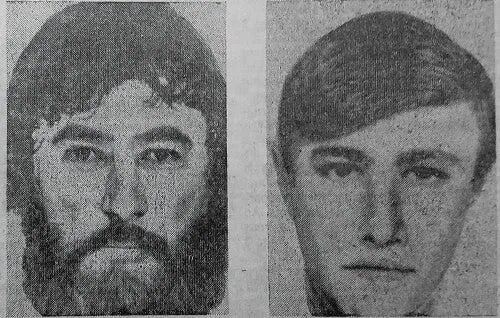
Police artists made sketches and even sculpted busts of pssible suspects in the hope that they would lead to indentification.


One early suspect was Donald Wayne Forrester, a 34-year-old sex offender who confessed to the murders.
Forrester provided detailed descriptions of the victims’ deaths, but his confession was met with skepticism by police, who believed he may have been trying to avoid being transferred to a more dangerous prison. With no further cooperation from Forrester and no direct evidence proving he committed the murders, Forrester was never charged. He died in prison from cancer in 2006 at age 55.
Another suspect was a Greenwood man who fit the description of a fair-haired man seen at the Burger Chef on the night of the murders. This man was later imprisoned for other armed robberies of fast-food restaurants. However, without confessions or direct physical evidence, police were unable to make arrests in the Burger Chef case.
At the time, there was some speculation that the murders were tied to other crimes that had shocked the town over the preceding months, such as the murder of Julia Scyphers and the Speedway bombings. However, these cases were subsequently found to be unconnected to the Burger Chef murders.
Investigation Challenges
One of the major challenges in the investigation is that the initial crime scene was mishandled. The morning after the four victims were kidnapped, the restaurant was cleaned to open to customers — getting rid of any DNA that could’ve been found at the scene of the crime.
“Had the investigation been handled properly from the get-go, you and I may not be sitting here having this conversation right now,” said Adam Kamien, co-director of the documentary “The Speedway Murders”. The restaurant was never dusted for fingerprints, and the remaining garbage was removed, potentially destroying valuable evidence.
Another challenge is that many of the witnesses have since died.
The passage of time has also made it difficult to track down leads and gather new information. Additionally, the Jonestown Massacre, which occurred on the same weekend as the Burger Chef murders, overshadowed the case in the media, potentially hindering the investigation.
Despite these challenges, there is still hope that new evidence or witnesses will come forward.
In 2019, Kevin Greenlee of The Murder Sheet podcast made a Freedom of Information Act request to the FBI, seeking its file on the case. Recently, Greenlee received the 414-page redacted investigation. The release of this file may provide new leads and help to finally solve this decades-old mystery.
The Impact
The Burger Chef murders shocked Johnson County and the greater Indianapolis area. The murders at the Burger Chef in Speedway, Indiana, USA in 1978 shocked the local community and surrounding areas. As a result of the incident, the Burger Chef restaurant chain closed down in Indiana.
The murders also had a lasting impact on the families of the victims. Theresa Jeffries, the sister of Ruth Shelton, said, “My mother, she never did get over it, of course.” Jayne Friedt’s classmates said they’ve also never forgotten her. “She always made cracks and jokes, always full of life, let’s put it that way. Even if she was in a bad mood, you could see Jayne walking down the hall with a big smile,” friends Cheryl Arnett and Louise Watkins said.
The murders also had a broader impact on the fast food industry. The case highlighted the vulnerability of fast food workers, who often work late hours and handle large amounts of cash. In the wake of the Burger Chef murders, many fast food chains implemented new security measures, such as installing surveillance cameras and requiring employees to work in pairs.
Recent Developments
In recent years, there has been renewed interest in the Burger Chef murders. Several documentaries and podcasts have been produced about the case, including “Murders at the Burger Joint” (2022) and “The Speedway Murders” (2024).
These documentaries have helped to raise awareness of the case and keep the memory of the victims alive.
The release of the FBI’s file on the case in 2023 has also generated new leads and renewed hope that the case may finally be solved. The file contains hundreds of pages of investigative notes, interviews, and reports, which may provide new insights into the crime and the suspects.
The families of the victims continue to fight for justice. Theresa Jeffries, the sister of Ruth Shelton, said, “I hope that before my time on Earth is gone that I have those answers.” The families are hopeful that the renewed interest in the case will lead to new information and that the killers will finally be brought to justice.
Conclusion
The Burger Chef murders are a tragic reminder of the senseless violence that can occur in our communities. The case remains unsolved, but the families of the victims continue to hope for justice. If you have any information about the Burger Chef murders, please contact the Indiana State Police.
Sources
- Unresolved has an excellent article on this crime.
- This book by author Julie Young explores this baffling case in depth.
As an Amazon Associate, I earn from qualifying purchases. I include the links to books that I have found interesting.\
 The Crime Chronicles
Leave a comment