Halloween is a time for fun and frights, but it can also be a time for tragedy. Here we explore three Halloween murders that will send chills down your spine. We remember the victims of these crimes and honor their memories.

The Murder of Yoshihiro Hattori
On October 17, 1992, 16-year-old Japanese exchange student Yoshihiro Hattori was shot and killed in Baton Rouge, Louisiana. Hattori was on his way to a Halloween party with the son of his host family, the Haymakers, when they mistakenly knocked on the wrong door. He was dressed as John Travolta from “Saturday Night Fever”.
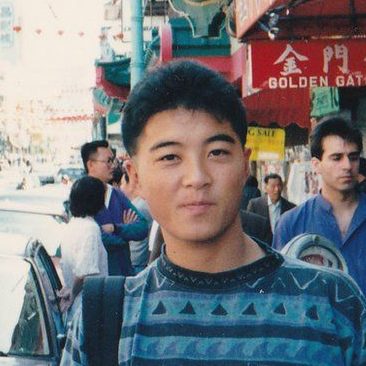
The homeowner, Rodney Peairs, mistook him for an intruder.
Hattori and his host brother, Webb Haymaker, had arrived at the house’s front door and rang the doorbell. When no one answered, they walked towards the carport to return to their car. Bonnie Peairs, Rodney’s wife, opened the side door leading to the carport and saw Haymaker standing a few yards away. Haymaker was wearing a neck brace due to a recent injury and bandages as part of a Halloween costume. He attempted to address Bonnie Peairs, but she later testified that she panicked when Hattori appeared from around the corner and moved briskly towards her. She slammed the door and told her husband Rodney to get his gun.
Armed with a .44 Magnum revolver, Rodney Peairs opened the carport door and pointed the gun at Hattori, yelling, “Freeze!”.
Hattori, who may not have fully understood the command due to cultural differences and unfamiliarity with American slang, stepped back toward the house, saying, “We’re here for the party”.
Peairs shot Hattori once in the chest, killing him instantly. The shot pierced the upper and lower lobes of Hattori’s left lung and exited through the area of the seventh rib; he died in an ambulance minutes later from blood loss.
The Peairses did not come out of their house until the police arrived about forty minutes after the shooting. Bonnie Peairs shouted to a neighbor to “go away” when the neighbor called for help.
Initially, the Baton Rouge Police Department quickly questioned and released Rodney Peairs and declined to charge him with any crime because—in their view—Peairs had been “within his rights in shooting the trespasser”. Only after Louisiana Governor Edwin Edwards and the Japanese consul in New Orleans protested was Peairs charged with manslaughter.

Peairs was acquitted of manslaughter by a jury after just over three hours of deliberation. The verdict sparked outrage in Japan and the United States, with many people believing that Peairs had used excessive force and that the jury’s decision was racially motivated.
Hattori’s parents and his host family, the Haymakers, filed a wrongful death suit against Rodney Peairs in the 19th Judicial District Court of East Baton Rouge Parish, Louisiana. After a four-day trial, Peairs was found liable for Hattori’s death and ordered to pay the Hattoris US$650,000 ($1,336,192 today) in damages. The judge ruled that “there was no justification whatsoever that a killing was necessary for [him] to save himself and/or his family”.
The murder of Yoshihiro Hattori was a senseless tragedy that had a profound impact on the world. It sparked conversations about race relations and attitudes towards Asians in the United States, and it led to calls for stricter gun control laws. Hattori’s parents and his host family became vocal advocates for gun control, and their efforts helped to pass the Brady Bill, which mandated background checks and a waiting period for gun purchases. Hattori’s death also led to increased awareness of the importance of cultural understanding, as it highlighted the potential for misunderstandings and miscommunication between people from different cultures.
The Murder of Taylor Van Diest
On November 1, 2011, 18-year-old Taylor Van Diest died in the hospital after being attacked and killed while walking to meet friends to trick-or-treat in Armstrong, British Columbia. Van Diest had been found unconscious near some train tracks the night before, on October 31, 2011.
Van Diest had left home at 5:50 p.m. on October 31. She sent a text message at 6:00 p.m., but after that, she was attacked. Her phone was found by the railroad tracks at 7:30 p.m., and she was discovered nearby unconscious at 8:45 p.m..
Matthew Foerster, a 28-year-old Cherryville resident, was arrested and charged with Van Diest’s murder. Foerster first said that she fell and hit her head, but he later admitted he strangled Van Diest with his hands and a shoelace and crushed her skull with repeated blows from a heavy flashlight as she lay on the ground.

Matthew Foerster, a 28-year-old Cherryville resident, was arrested and charged with Van Diest’s murder. Foerster first said that she fell and hit her head, but he later admitted he strangled Van Diest with his hands and a shoelace and crushed her skull with repeated blows from a heavy flashlight as she lay on the ground.
Foerster was convicted of first-degree murder in 2014 and sentenced to life in prison with no chance of parole for 25 years. However, his conviction was overturned on appeal in 2015 due to errors in jury procedure.
In 2018, Foerster pleaded guilty to the lesser charge of second-degree murder and was sentenced to life in prison with no chance of parole for 17 years.
The murder of Taylor Van Diest was a brutal and senseless crime that shocked the community of Armstrong.

It is a reminder of the dangers that young women face, and it has led to calls for increased safety measures for women. The community of Armstrong rallied around the Van Diest family, and an annual memorial walk was held in Taylor’s memory for several years.
The Griffin-Liske Family Murders
On October 31, 2010, William “Bill” Liske, his wife Susan Liske, and her son Derek Griffin were murdered in their home in Martin, Ohio. The bodies were discovered by Susan’s 16-year-old son, Devon Griffin, who had spent the night at his father’s house.

Bill and his 24-year-old son, William “BJ” Liske, had spent the day before hunting. Then, during the evening, the Liskes had a celebratory get-together with a neighbor that broke up around midnight. On Halloween morning, Susan’s sister-in-law Lori Morse grew concerned when Derek didn’t show up to do some work for her husband. Calls to Derek and Susan went unanswered, so she reached out to Devon. He had spent the night at his father’s house and came home Sunday morning to change his clothes for church.
When Devon arrived home, he found the bodies of his murdered family members.
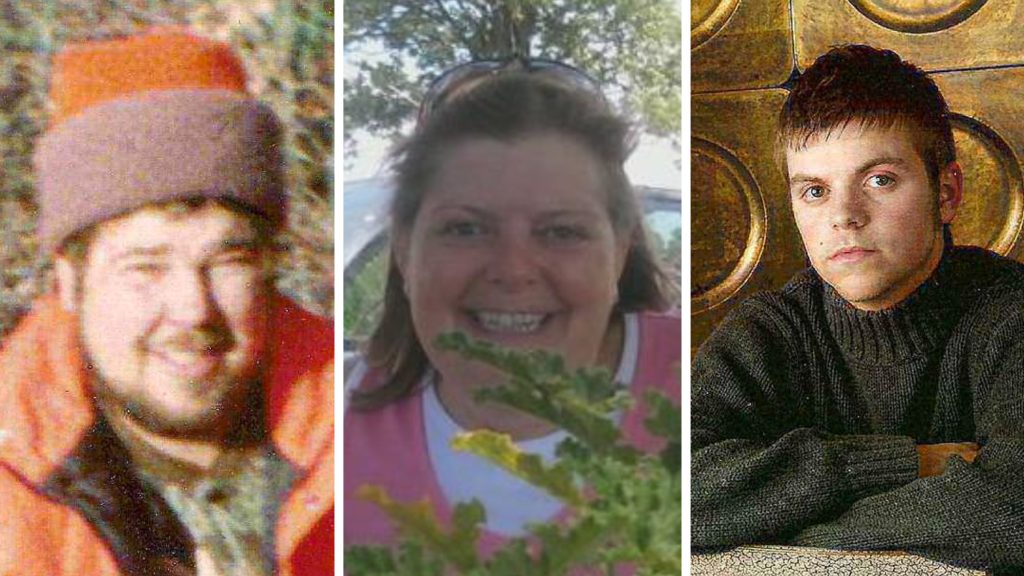
Bill’s 24-year-old son, William “BJ” Liske, was arrested and charged with the murders. BJ Liske had a history of mental illness and schizophrenia. He was found incompetent to stand trial in 2011 and was committed to a mental institution, where he remains today.
The Griffin-Liske family murders were a horrific crime that devastated the community of Martin.
It is a reminder of the dangers of mental illness and the importance of getting help for those who need it. The community of Martin rallied around the Griffin family, and a memorial service was held for the victims.
Conclusion
These three Halloween murders are just a few examples of the many tragedies that have occurred on this holiday. They are a reminder that evil can lurk in the shadows, even on a night that is supposed to be filled with fun and laughter. It is important to be aware of the dangers that exist, and to take steps to protect ourselves and our loved ones.
Sources
- https://en.wikipedia.org/wiki/Killing_of_Yoshihiro_Hattori
- https://globalnews.ca/news/5193497/dark-poutine-podcast-murder-taylor-van-diest/
- https://www.toledoblade.com/local/2010/11/01/Murder-charge-lodged-against-suspect-in-triple-murder-in-Ottawa-County/stories/201011010024
What do you think about these cases? How can we prevent similar tragedies from happening in the future?
 The Crime Chronicles
Leave a comment