In the first two parts of this series, we explored the chilling biography of Jeffrey Dahmer and remembered the lives tragically lost to his horrific crimes. Now, in this final installment, we turn our attention to the investigation that ultimately brought his reign of terror to an end. We will examine the events leading up to his arrest, the gruesome discoveries made in his apartment, the trial that followed, and the legacy of his case.
The Investigation: A Twist of Fate
The investigation into Jeffrey Dahmer’s crimes began with a twist of fate. On July 22, 1991, Tracy Edwards, a 32-year-old man, managed to escape from Dahmer’s apartment after being drugged and held captive. Edwards flagged down two police officers and led them back to Dahmer’s residence. Upon entering the apartment, the officers were met with a scene of unimaginable horror.
They discovered Polaroid photographs of dismembered bodies, human remains scattered throughout the apartment, and a foul stench emanating from a refrigerator. Dahmer was immediately arrested.

Uncovering the Horror: Gruesome Discoveries
The subsequent search of Dahmer’s apartment revealed the full extent of his depravity. Investigators were met with a scene of unimaginable horror, a macabre tableau of human remains scattered throughout the dwelling. They found parts of a total of eleven different bodies, some dismembered and stored in various states of decomposition. Severed heads were discovered in the refrigerator and freezer, a barrel in the corner contained dissolved torsos, and skulls were used as grotesque ornaments. The stench of death permeated the air, evidence of the unspeakable acts that had taken place within those walls.
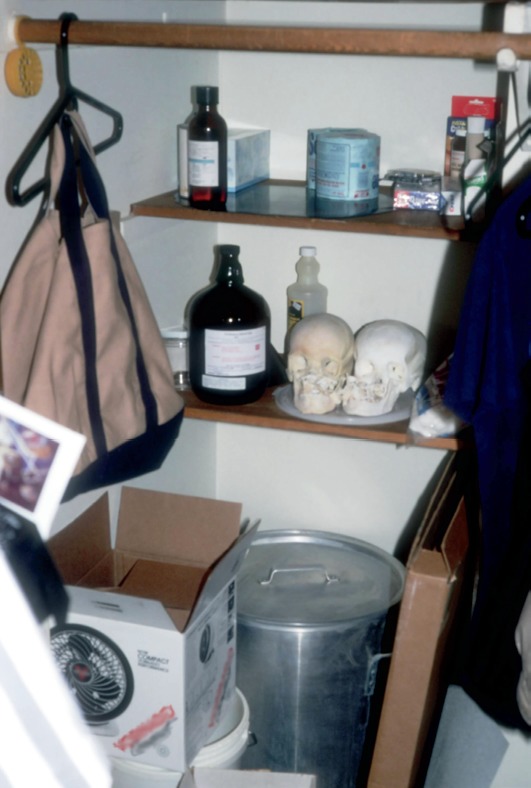
The apartment also yielded evidence of cannibalism, with investigators finding human remains in cooking pots and utensils. Further investigation revealed that Dahmer had engaged in necrophilia with his victims and had attempted crude lobotomies on some while they were still alive, hoping to create submissive companions. His collection of Polaroid photographs documenting his crimes provided further chilling testimony to his depraved actions.

The gruesome discoveries sent shockwaves throughout Milwaukee and the nation. The sheer scale of Dahmer’s crimes and the horrifying details that emerged left an indelible mark on the collective psyche. Dahmer’s apartment became synonymous with horror, a stark reminder of the darkness that can lurk within seemingly ordinary individuals.
The Trial: A Monster Confesses
Dahmer’s trial began in January 1992. He pleaded guilty but insane to fifteen counts of murder. The trial focused on whether Dahmer was legally sane at the time of his crimes.
The defense argued that Dahmer suffered from severe mental illness, rendering him unable to control his impulses. They presented expert testimony detailing his troubled childhood, struggles with addiction, and various psychological disorders.

The prosecution countered that Dahmer was fully aware of his actions and went to great lengths to avoid detection. They argued that his meticulous planning, disposal of evidence, and attempts to create “zombies” demonstrated a calculated and deliberate mind.
After two weeks of testimony and deliberation, the jury found Dahmer sane and guilty on all counts. He was sentenced to fifteen consecutive life terms in prison.
Conclusion
Dahmer spent his remaining years in prison, where he was reportedly attacked by other inmates on several occasions. In November 1994, he was beaten to death by a fellow inmate, Christopher Scarver. His death brought a sense of finality to a case that had captivated and horrified the nation. However, it also raised questions about the effectiveness of the prison system and the safety of inmates.
As we conclude this three-part series on Jeffrey Dahmer, we are left with a profound sense of sadness and a renewed commitment to honoring the victims and learning from their tragic stories. We must continue to fight for justice, equality, and understanding, working towards a future where such horrors are never repeated.
Dahmer’s defense team argued he was not guilty by reason of insanity. What are your thoughts on the insanity defense, particularly in cases like this one?
Sources
- The Shrine of Jeffrey Dahmer by Brian Masters is possibly the best book written about Dahmer. Masters really investigates the psychology behind Dahmer’s actions and has a unique perspective. This is one of the few books that looks at who the victims were as people.
- Watch video of the first Dahmer trial here https://www.courttv.com/trials/wi-v-dahmer-1992/
- Monster: The True Story of the Jeffrey Dahmer Murders by Anne Schwartz is unique because she was the reporter who originally covered the story as it unfolded. Rarely do we get books from someone who was there to witness much of the investigation firsthand.
- A Father’s Story by Lionel Dahmer is at once both fascinating and infuriating. It is certainly slanted to present Lionel in the best light and paint Joyce as a terrible wife and mother, so read it with that understanding. But it’s still an important read.
As an Amazon Associate, I earn from qualifying purchases. I include the links to books that I have found interesting.
 The Crime Chronicles
Leave a comment