Unveiling the Depths of Depravity
In the first installment of our series, we explored the carefully crafted facade of John Wayne Gacy, the “Killer Clown” who hid his monstrous nature behind a mask of normalcy. In Part 2, we got to know his victims. Now, in Part 3, we delve into the darkest chapter of his story: the investigation, capture, and chilling revelations that exposed the true extent of his depravity. Prepare to enter the house of horrors, where the nightmares of countless young men became a terrifying reality.

The Suspect
The disappearance of 15-year-old Robert Piest in December 1978 marked a turning point in the investigation into the disappearances. Piest had last been seen leaving his job at a pharmacy to meet a contractor about a potential summer job. When Piest failed to return home, his family reported him missing, and the police began to investigate.
Pharmacy owner Phil Torf told police that John Wayne Gacy was most likely who the boy had gone to meet. He had been in the store earlier that day and mentioned hiring local teens at a much higher wage than the pharmacy paid. Gacy quickly became a suspect in Piest’s disappearance. His prior conviction for sodomy and his connection to several other missing young men raised red flags for the investigators. A search warrant was obtained for Gacy’s house, and what they found there would shock the nation.
First Search: Unsettling Discoveries
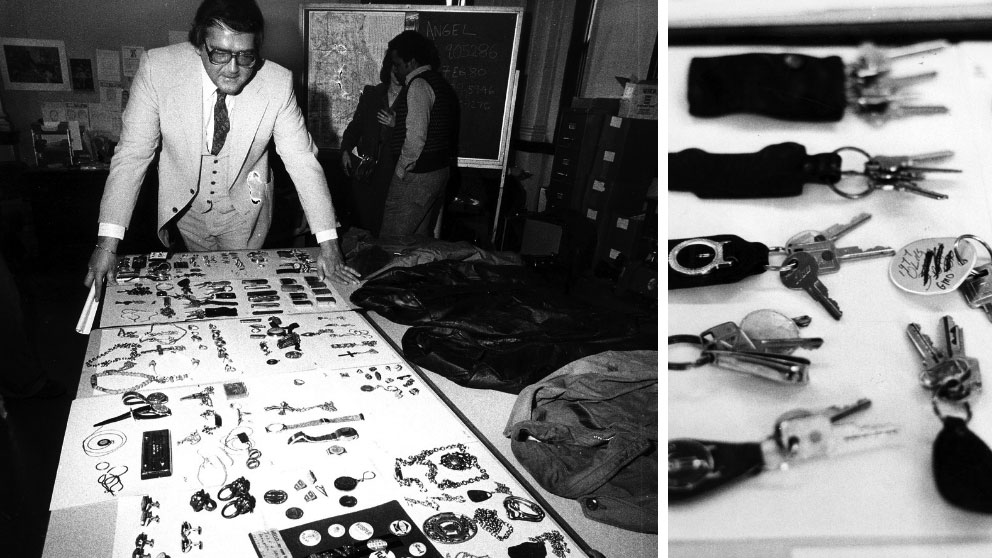
Fearing that Piest was being held captive in Gacy’s home, law enforcement issued a search warrant on December 13, 1978. The initial search warrant granted access to Gacy’s residence, where investigators stumbled upon a trove of disturbing items: identification belonging to missing young men, jewelry, handcuffs, hypodermic needles, and suspicious stains. Though no bodies were found at this point, the evidence reinforced their concerns and placed Gacy under 24-hour surveillance.
Surveillance and Second Search: Building the Case
Law enforcement officers staked out the house and followed Gacy everywhere he went. Arrogant, Gacy treated the surveillance like some sort of game. On December 18th, he invited detectives Hachmeister and Albrecht to dinner. While discussing his clowning, he made the comment “You know, clowns can get away with murder.” Later that afternoon, he told his lawyers to file a lawsuit for harassment, claiming that they were ruining his reputation. The next day, Gacy invited officers inside his home and they noticed a smell of death.
As the surveillance intensified, investigators noticed peculiar behavior from Gacy, including burning items in his backyard. They interviewed former employees, especially Michael Rossi and David Cram. Both had lived with him for periods during the murders. Gacy later sold John Szyc’s car to Rossi and gave Cram a watch that belonged to one of the victims. Both Cram and Rossi also described being ordered to dig ditches and spread lime in the crawl space.
A second search warrant was secured on December 21st, 1978, and during this search, trained dogs detected the scent of death in the crawl space beneath the house. This chilling revelation only hinted at what lay below.
Arrest and Confession: The Monster Unmasked
Gacy was arrested on December 21, 1978. He was subjected to intensive questioning over several days, with detectives working in shifts to keep the pressure on him. Initially, he maintained his innocence, offering alibis and denying any involvement in the disappearances. However, as the evidence mounted against him – the discovery of Robert Piest’s belongings in his home, the witness accounts linking him to the missing boys – his resolve began to crumble.
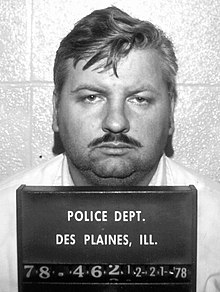
On December 22, 1978, after hours of interrogation, Gacy finally cracked. This marked the beginning of his chilling confession, where he admitted to killing 33 young men, providing gruesome details of his crimes. Gacy describes having sexual relations with his victims, most unwillingly. Some he tricked into putting on handcuffs, telling them he was going to do a magic trick. Others he drugged or threatened with a gun. While one victim, McCoy, was stabbed, most died of strangulation (6) or asphyxiation (13). Many were so decomposed that the cause of death was never determined.
Once he started talking, he had plenty to say. Gacy drew a diagram of the crawl space, showing where victims were buried. He also told officers that five bodies were thrown into rivers, although only four were ever found. He claimed that his victims were hustlers, prostitutes, and liars, and that sometimes he just woke up to find “dead, strangled kids” in his home.
The Crawl Space
On December 21, investigators began removing floorboards throughout the house, starting in the kitchen. On this first day, they found remains belonging to at least three different bodies. By the end of the 26th, nine bodies had been removed from the home.
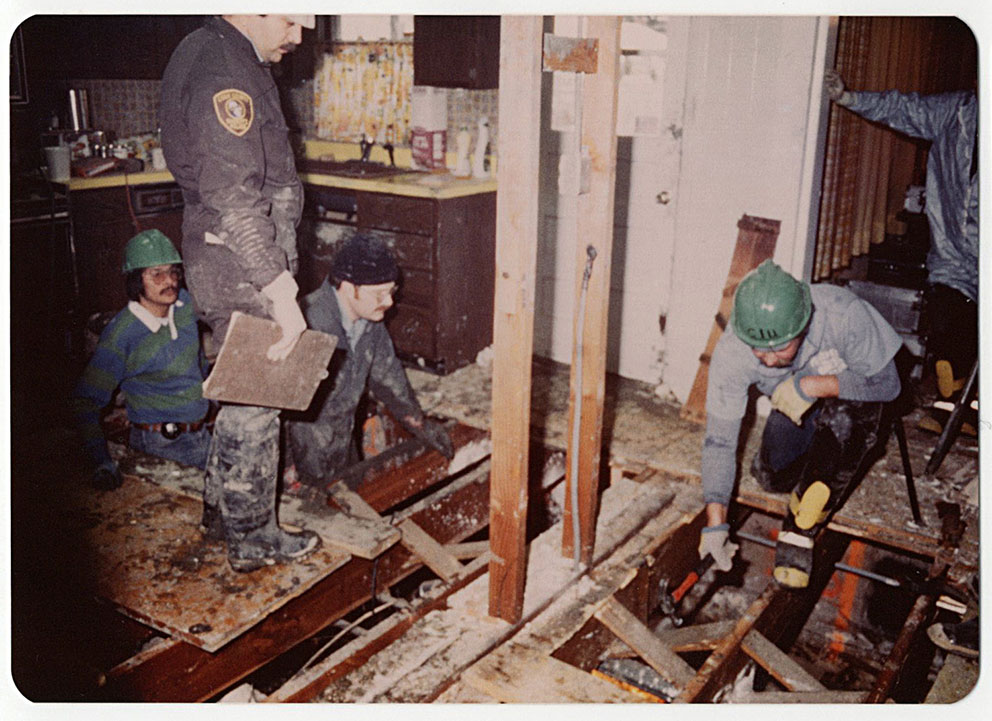
Two days later the total had climbed to 21, but none were positively identified yet. Making this harder was the fact that not many families had come forward to suggest their missing boys may be involved. Sergeant Howard Anderson of the Cook County Sheriff’s Office theorized that “Maybe they cannot imagine their sons getting involved in a case with homosexual overtones.” Others may have been just unable to consider the horror of their child’s death.
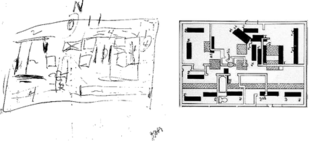
Here, the sketch Gacy drew for detectives is shown next to the investigators’ diagram showing where each body was located.
The excavation of Gacy’s crawl space slowly unveiled a true nightmare – the decomposing bodies of 29 young men and boys, meticulously buried. Gacy’s house had transformed into a macabre tomb, a testament to his years of sadistic predation. Four more victims were later found in the Des Plaines River. Gacy later said that he threw the last bodies in the river because there was no more space in the house. He admitted that he considered the attic but claimed that he was concerned about “leakage”.
The Trial and Confession
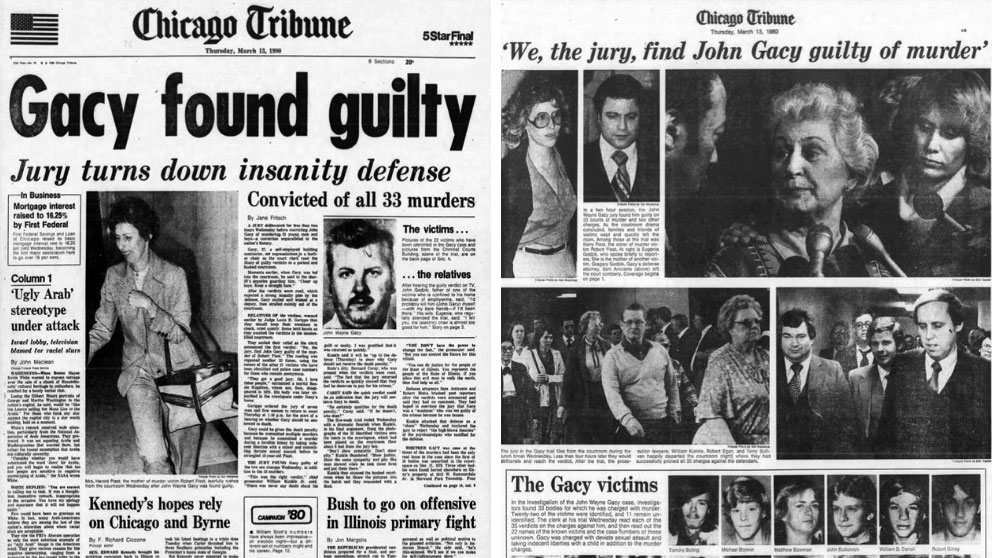
Gacy’s trial began in February 1980 and lasted six weeks. He pleaded not guilty by reason of insanity, claiming that he was possessed by demons and had no control over his actions. The defense presented expert witnesses who testified about Gacy’s mental state, but the prosecution countered with evidence of Gacy’s premeditation and his attempts to cover up his crimes.
The jury ultimately rejected Gacy’s insanity plea and found him guilty on 33 counts of murder. He was sentenced to death.
In the years following his conviction, Gacy continued to attract public attention. He gave numerous interviews, wrote an autobiography, and even painted portraits of himself as Pogo the Clown. His case became a source of morbid fascination, and his name became synonymous with evil.
Conclusion
While Gacy confessed to 33 murders, there is a lingering suspicion that there may be more victims. Several young men who disappeared during the time Gacy was active remain unaccounted for. In recent years, investigators have used DNA technology to try to identify some of the remaining unidentified bodies found in Gacy’s crawl space. This ongoing search for answers offers a glimmer of hope for closure to the families of those who may have fallen prey to Gacy’s evil.
Gacy’s defense team attempted to portray him as mentally ill. How do you think mental illness should be considered in cases involving violent crimes?
Sources:
- John Wayne Gacy Biography – Biography.com
- John Wayne Gacy – Murderpedia
- This excellent timeline from The Chicago Tribune
- Cahill, Tim (1986) Buried Dreams: Inside the Mind of John Wayne Gacy
- Sullivan, Terry; Maiken, Peter T. (2000). Killer Clown: The John Wayne Gacy Murders
- Linedecker, Clifford L. (1980). The Man Who Killed Boys: A True Story of Mass Murder in a Chicago Suburb
As an Amazon Associate, I earn from qualifying purchases. I include the links to books that I have found interesting.
 The Crime Chronicles
Leave a comment